Tania Maria & Viva Brazil Quartet - Live at the Blue Note (2002)


Tania Maria & Viva Brazil Quartet - Live at the Blue Note (2002)


Musicians:
Tania Maria (Piano, Synthesizer and Vocals) 
Luiz Augusto (Drums) 
Carlos Werneck (Bass Guitar) 
Mestre Carneiro (Percussion) 

Tracks:
01  Funky Tamborim (Tania Maria/Correa Reis) 8:11 
02  Quase (Charles Mangione/Jorge Goncalves) 6:43 
03  Granada (Augustin Lara) 7:25 
04  Bom Bom Bom Tchi Tchi Tchi (Tania Maria/Correa Reis) 9:31 
05  Valeu (Tania Maria/Correa Reis) 9:20 
06  E' Carnaval (Tania Maria/Correa Reis/Van Gibbs) 6:51 
07  Florzinha (Sidney Bechet/Tania Maria/Correa Reis) 7:07 
08  Minha Mae and Sangria (Tania Maria/Correa Reis) 6:08 


Most albums by Brazilian female vocalists follow the styles of the queens of the music, like Astrud Gilberto or Gal Costa, making records that are either smoothly romantic or rhythmically kinetic.  On 2002's Live at the Blue Note, Tânia Maria delivers an impressive set that owes little to either style.  Maria's band, the Viva Brazil Quartet, owes at least as much to hard boppers like the early-'60s Miles Davis group as it does to Antonio Carlos Jobim, and Maria's idiosyncratic, highly percussive keyboard style is much more Cecil Taylor than Walter Wanderley.  The recording is rather oddly mixed, with Maria's piano and synthesizer in the forefront, her equally distinctive vocals much farther back, and Carlos Werneck's guitar and bass sometimes barely audible, but the performances are uniformly first-rate.  Maria sings in both English and Portuguese, sometimes switching mid-song, but at her most transcendent, Maria breaks into wordless flights of sound, as on the exhilarating "Granada" and the whistled choruses of the ballad "Valeu."  At these moments, the occasionally herky-jerky rhythms and fractured melodies coalesce into something magical.  Live at the Blue Note may be a bit advanced for those who are just looking for some romantic bossa nova music, but it's an excellent starting point for discovering Tania Maria.  ~ Stewart Mason, AMG


http://www.h33t.com/details.php?id=5c901b84e57969c56a46f4fcac6722f08ea7a49e

George Benson Quartet - The George Benson Cookbook (1966)


George Benson Quartet - The George Benson Cookbook (1966)


Musicians:
George Benson (Guitar & Vocal) 
Lonnie Smith (Organ) 
Ronnie Cuber (Baritone Saxophone) 
Bill Kaye (Drums) - 2-4,7,10,13 
Marion Booker (Drums) - 1,5,6,9,11,14 
Jimmy Lovelace (Drums) - 8,12 
Bennie Green (Trombone) - 2-4,7,10,13 
Al Hall (Trombone) - 2-4,7,10,13 
Albert Winston (Fender Bass) - 1-7,9,10,13 
Lenny Seed (Congas) - 2-4,7,13 
King Curtis (Tenor Saxophone) - 9,11,14 
Blue Mitchell (Trumpet) - 11,14 

Tracks:
01  The Cooker (George Benson) 
02  Benny's Back (George Benson) 
03  Bossa Rocka (George Benson) 
04  All Of Me (Gerald Marks/Seymour Simons) 
05  Big Fat lady (George Benson) 
06  Benson's Rider (George Benson) 
07  Ready and Able (Jimmy Smith) 
08  The Borgia Stick (George Benson) 
09  Return Of The Prodigal Son (Harold Ousley) 
10  Jumpin' With Symphony Sid (Lester Young) 
11  The Man from Toledo (George Benson) 
12  Slow Scene (George Benson) 
13  Let Them Talk (Little Willie John) 
14  Goodnight (George Benson) 


The second of Benson's John Hammond-produced albums is far and away the superior of the pair, mixing down-to-basics, straight-ahead jazz with soul-drenched grooving.  Suddenly Benson's backup group - same as that of Uptown, with Benny Green added on trombone now and then - has found its bearings and apropos to the title, they can cook, even sizzle.  The effect upon Benson's own playing is striking; with something to react against, his sheer ability to swing advances into the realm of awesome.  The rapid-fire work on "The Cooker" and "Ready And Able" will make you gasp.  Only one vocal here, an exuberant "All Of Me." [ In mid-2001 Columbia/Legacy reissued this 1966 classic, along with It's Uptown, recorded only several months earlier.  Four bonus tracks include a (previously unreleased) doo wop vocal rendition of Little Willie John's "Let Them Talk" and two Benson originals that are pure rock-n-roll: "The Man from Toledo" and "Goodnight. " Two of the bonus cuts are preceded by control-booth comments from the session's legendary producer, John Hammond. ] ~ Richard S.  Ginell, AMG


http://www.h33t.com/details.php?id=e95c25aee59a27b9650e8f9c84fc1576186ebfb4

Wes Mongomery - Complete Live in Paris (1965)


Wes Mongomery - Complete Live in Paris  (1965)


Musicians:
Wes Montgomery (guitar)
Harold Mabern (piano)
Arthur Harper (bass)
Jimmy Lovelace (drums)
Johnny Griffin (tenor sax on CD2 #3 #5)

Tracks CD 1: 
1  Four on Six
2  Twisted Blues
3  Impressions
4  To When
5  Jingles

Tracks CD 2:
1  The Girl Next Door
2  Here's That Rainy Day
3  Round About Midnight
4  Full House
5  Blue and Boogie/West Coast Blues


Now I know what it feels like to discover an unknown Renoir work, although to be fair a friend from the West Coast turned me on to this. Released this year, Wes in Paris - Live - in 1965, is a treasure chest. Recorded right in the middle of his 'change-over' period, Wes is so appreciative of this Paris venue and audience that he gives them his best, ever.  A 2 Disc set with outrageous sound, this one completes a trilogy of Live Wes that includes "Smokin' At The Half Note", "Full House", and now this INCREDIBLE performance.  The personnel are: Harold Mabern, piano; Arthur Harper, bass; Jimmy Lovelace, drums and a special treat - Johnny Griffin on 3 tracks, including the showstopping "Full House" track (listen to the audience and Wes' audible response to this kind of appreciation, whilst he was being skewered for 'selling out' in his own country).  The groove laid down is a little more "classic" jazz, and maybe a bit less "groove-oriented" than Wynton Kelly's Trio, but it matters not one bit.  It's more Wes, and Live no less! Wait until word gets around about this ~ douglas negley

Wes is admittedly more "aggressive" in his playing on this occasion, partly due to his band mates and the nature and length of the program.  Unlike the grooving, always "in the pocket," rhythm section of "Smokin' at the Half Note" (Kelly, Chambers, Cobb), the Harold Mabern-led rhythm section gives the music a forward edge, or emotive quality, suggestive of Coltrane and McCoy.  The result is often music based on tension and release rather than melodic inventiveness - leading to some purely "physical" playing and grandstanding on the parts of Mabern and tenor saxophonist Johnny Griffin (the two ballads opening the second disk are my favorite moments of the concert). 

The audio is acceptable - and thankfully the balance favors Wes' guitar, which sounds as "fat" and consistent as ever.  But I suspect this recording won't wear as well with me and other non-guitarists as his meetings with Wynton Kelley, Milt Jackson, and Jimmy Smith, not to mention the classic Riverside studio albums.  If there were more of Wes on record, I'd give this one 4 stars.  Pick it up only if you have "Smokin'," "Full House," and "The Incredible Artistry." ~ Samuel Chell


http://www.h33t.com/details.php?id=f4096152ad99a782803f2776894ee21ebfe70815


http://www.h33t.com/details.php?id=569c2d3e5553e8fe22ef143ee5e388c9b8b2feb7


John Coltrane & Tadd Dameron - Mating Call (1956)


John Coltrane & Tadd Dameron - Mating Call (1956)

Musicians:
John Coltrane : tenor saxophone
Tadd Dameron : piano
John Simmons : bass guitar
Philly Joe Jones : drums

Tracks:
01  Mating Call
02  Gnid
03  Soultrane  
04  On a Misty Night
05  Romas

06  Super Jet
"  This fine set, recorded on November 30, 1956, has been reissued several times, often as a John Coltrane date, but make no mistake, this is a Tadd Dameron session, and his elegant compositions are its key component. Coltrane was fresh off playing with Miles Davis in 1956 and was still a year away from heading his own sessions and three years away from recording Giant Steps, so it might be said that he was in transition, but then when was Coltrane not in transition? Dameron wisely gives him plenty of space to fill, and the rhythm section of John Simmons on bass and the great Philly Joe Jones on drums (not to mention Dameron’s own characteristically bass-heavy piano style) give Trane a solid bottom to work with, and if the spiritual and edgy emotion of his later playing isn’t quite in place yet, you can feel it coming. But again, this is Dameron’s date, with each of the six selections an original Dameron composition. There’s so much to marvel at here, including the Bahamian rhythms of the title track, “Mating Call,” the gorgeous build of “Soultrane” (often the title when this set is issued as a Coltrane date) and the undeniable grace and elegance of “On a Misty Night” (based in part on the melody line to “September in the Rain”). The straight blues piece “Romas” is also a lot of fun, particularly for Coltrane. Mating Call, or whatever title it sports, whether under Dameron’s name or Coltrane’s, is a solid and frequently overlooked gem. Don’t hesitate to pick it up. "


http://www.h33t.com/details.php?id=87fef07a3209e3ce9d7bcd6bcef7dbda2c2eb1fe

Grant Green - Am I Blue (1963)


Grant Green - Am I Blue (1963)

Musicians:
Grant Green (Guitar) 
Joe Henderson (Tenor Saxophone) 
Johnny Coles (Trumpet) 
John Patton (Organ) 
Ben Dixon (Drums) 

Tracks:
01  Am I Blue (Harry Akst/Grant Clarke)  
02  Take These Chains From My Heart (Hy Heath/Fred Rose)  
03  I Wanna Be Loved (Johnny Green/Edward Heyman/Billy Rose)  
04  Sweet Slumber (Lucky Millinder/Al J. Neiburg/Henri Woode) 
05  For All We Know (J. Fred Coots/Sam M. Lewis) 


"Am I Blue" features the classic Green/Patton/Dixon ensemble plus Johnny Cole and Joe Henderson on horns in a delightful yet unusually laid back vain. The gospel influence in John's playing is particularly evident on this recording, as is his minimalist philosophy. (If you don't have to play it, don't) Ironically, in his latter years, due to a strange accident with a car jack which would injure a tendon in his hand he would not have use of his pinky and fourth finger, yet could still create some of the richest and most amazing connections on the organ as well as develop very rich and lucid solo ideas ! The showstopper on the CD is the light and bouncy For All We Know... Of course, Johnny Coles and a then newcomer and relatively unknown Joe Henderson definitely get their word in, but it is amazing to hear John's passing chords behind them. Grant Green typically lays out, listening, listening, listening, listening (which is what a soloist needs to be doing when his other bandmates are playing... not playing over them, or holding coversations, but listening and taking in the dialogue). Finally, Grant comes in and is as crisp, melodious and swinging and used expect him to be... throwing in a few surprise left hooks as well! - - Last word goes to John... who in turn not only takes a well crafted single note solo, but digs down with a real nifty shout chorus as well (though admittedly I will ever have to admit that Johnny Hammond Smith and Wild Bill will ever have him beat on that.) With Ben Dixon in his corner, however, he does take it home quite masterfully ! of note: That's the one thing that distinguishes a Grant Green session from one of those sessions where people are trying to copy such a session - - you can really tell the players are listening to each other, providing a lot of space and responding to one another's ideas! True Jazz masters are at their best not when they're showing off what they know... but when they're really listening and responding to what's going on around them. Then magic occurs, as was the historical case of John Coltrane's layer of sound discovery. - by Eddie Landsberg, Amazon.com


http://www.h33t.com/details.php?id=b99f0fb353a0e23167b4b15612f519fb70437f04

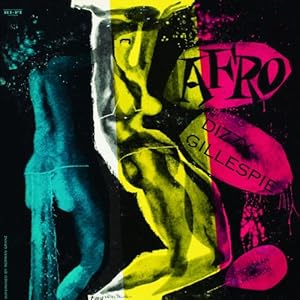
Dizzy Gillespie - Afro (1954)


Dizzy Gillespie - Afro (1954)

Musicians:
Quincy Jones Trumpet | (1-4)
Jimmy Nottingham Trumpet | (1-4)
Ernie Royal Trumpet | (1-4)
Leon Comegys Trombone | (1-4)
J. J. Johnson Trombone | (1-4)
George Matthews Trombone | (1-4)
George Dorsey Alto Saxophone | (1-4)
Hilton Jefferson Alto Saxophone | (1-4)
Hank Mobley Tenor Saxophone | (1-4)
Lucky Thompson Tenor Saxophone | (1-4)
Danny Bank Baritone Saxophone | (1-4)
Ray Concepcion Piano | (1-4)
Wade Legge Piano | (1-4)
Lou Hackney Bass | (1-4)
Robert Rodriguez Bass |
Jose Manguel |
Candido Camero Congas |
Mongo Santamaria Congas | (1-4)
Ubaldo Nieto Timbales |
Charlie Persip Drums | (1-4)
Rafael Miranda Percussion | (5-7)
Alejandro Hernandez Piano | (5-7)
Gilberto Valdez Flute | (5, 7)
Chico O'Farrill Arranger, Conductor | (1-4)

Tracks 1-4 recorded May 21, 1954 at Fine Sound, New York City
Tracks 5-7 recorded June 3, 1954 at Fine Sound, New York City

Tracks:
01  Manteca Theme
02  Contraste
03  Jungla
04  Rhumba Finale
05  A Night in Tunisisa
06  Con Alma
07  Caravan

Everything about this incredible Dizzy Gillespie LP screams "masterpiece". From the classic Manteca Suite (1-4), written by Cuban genius Chico O’Farrill, to the dionysian Caravan, to the incredible list of band members, a virtual who's who of Afro-Cuban jazz luminaries, right down to the stupendous cover art by David Stone Martin. If you enjoy your jazz latin-tinged, this is the one to go for.

This cd is a great moment in jazz history. The arrangements are perfect; the performances from this large ensemble are tight. A musical unit at the height of its ability playing a unique set of numbers. Dizzy's solos are unbelievable. Manteca and Caravan especially are powerful performances. One may have qualms with the version of "Night in Tunisia," as it uses flute as one of the lead instruments, but it's an interesting variation-- though you haven't heard it till you've heard Bird and Diz do it on sax and trumpet. The numbers are highly percussive, with an array of African drums going. It's intense, innovative and I've never heard another cd like it. ~ Amazon Customer

It's about 1:30 AM as I listen to a copy of Dizzy Gillespie's "Afro" that came in the mail today. The CD itself is a digitally remastered 24-bit limited edition release. I don't even really have a system nice enough to really take advantage of the sound. Still, my mind is almost meltin' outta my ears as I listen to this mindblowing marriage of "Afro-Cuban Vs. Afro-American" jazz.

I would say that it's like nothing I've ever heard...but that wouldn't be accurate. I grew up listenin' to jazz and so-called "latin" music as much as R&B and hip hop. It would prolly be more accurate to say that it's like nothing I've heard in years. And, in fact, I'm almost dumbfounded that I've never heard this album until now.

Dizzy Gillespie has always been one of my favorite jazz musicians, second only to Miles Davis--and it's an extremely close second. Dizzy's "A Night in Tunisia" (he's recorded several versions, right?), has been one of my favorite numbers since I was a kid. Tonight, for example, I'm now well into the 19th or 20th replay of the 1954 version on this album--and there's still two more tracks on the CD to go!

For years I've played the "if you had to be stuck on a desert island with ten albums, which ones would they be?" game with friends and acquaintances. I'm not even gonna torture myself over exactly who it's gonna be...but Dizzy Gillespie just replaced someone on that list tonight. ~ Paco Taylor

http://www.h33t.com/details.php?id=7c2dc48be4243ee9dfe0118a6901f7416d06bc23

WHO WILL KEEP THE SEEDS?

Dear Friends,


First I'd like to thanks all of you that prestige our address.
Second I made a rapid class about "torrents"...


You must download a program, like: u-torrent
When you run it you can catch files on the web.


I decide to publish some torrent links 'cause I have difficult with some serve broken links.


Now let's try it! You can download a superb album of an amazing Brazilian Jazz Quartet.


...

Brazilian Jazz Quartet - Coffee and Jazz [Columbia 1958]  
This truly awesome album was released in 1958. As a matter of fact, this group should be considered as a sort of embryo of the legendary "Zimbo Trio". 

Musicians: 
Casé (Jose Ferreira Godinho Filho) - sax;
Moacyr Peixoto - piano;
Luiz Chaves - doublebass;
Rubens Barsotti (Rubinho) - drums.

Tracks: 
01  The Lonesome Road 
02  When Your Lover Has Gone 
03  Cop-Out 
04  Black Satin 
05  Makin' Whoopee 
06  No Moon at All 
07  Old Devil Moon 
08  Don't Get Around Much Anymore 
09  You'd be so Nice to Come Home To 
10  I will Close my Eyes 
11  Alone 
12  Too Marvelous for Words

http://www.h33t.com/details.php?id=969b300575c2fc2029dea15c8a24ff98f94759eb

THE SKATALITES - Stretching Out (1983)


THE SKATALITES - Stretching Out [ROIR 1983]

DISC1:
1. Freedom Sounds
2. Bridge View
3. Latin Goes Ska
4. Tear Up - (with Cedric Brooks)
5. Guns Of Navarone
6. Man In The Street
7. Come Dung
8. Big Trombone
9. Ska Ba
10. Road Block
11. Eastern Standard Time
12. Confucius


DISC 2:
1. Lee Harvey Oswald
2. Black Sunday
3. Mood For Ska
4. Fidel Castro (#1)
5. El Pussy Cat
6. Four Corners
7. Exodus
8. Old Fowl
9. Fidel Castro (#2)
10. Welcome Back Home


ROIR Records had re-released some excellent live and historic Skatalites music on CD, LP, and digital download, which was previously only available on cassette.  Stretching Out, from 1983, is historically significant because it is from the year when the band had just reconciled the differences that had driven their 2-year career apart in 1965.  Peter Tosh’s manager, Herbie Miller tracked them all down to play at the 1983 Jamaica Sunplash.  Prior to the big gig, the band got together for some rehearsal nightclub gigs at Miller’s Blue Monk Jazz Gallery in Kingston before a crowd of local fans, friends, and fellow musicians.  There were no restrictions on the length of their sets, no barriers on soloing, and no boundaries in general… which led to a stretched out, spontaneously joyful Ska reunion.


You can feel the small-room vibe of the club in the recordings and you can almost smell the ganga smoke and feel the heat and the sweat created by those in attendance, who were most likely moved by the endless backbeat skank to dance the night away.  The Skatalites are a large group of players (9 of them, with 3 guests) whose playing is as smooth as cocoa butter over the 2 hours.  There never seems to be any confusion as to who is soloing and when the band comes back in; this is a group of musicians who fully support each other.  And the results make it all sound so easy, as the best musicians do.  The band cooks its way through classics like “Guns of Navarone”, “Confucius”, and “Lee Harvey Oswald” and flow like melting moonlight over stretched out numbers like “Black Sunday” and “Ska Ba”.


The Skatalites horn blowers are stunning throughout. They were clearly inspired by the bebop players (like John Coltrane, Dizzy Gillespie, Charlie Parker) and the musical freedom and boundary-bursting those players pioneered.  And the Skatalites, in turn, helped pioneer the sound that would later morph into rock steady and reggae.  Unfortunately, all but one (Lester Sterling-alto sax, who still blows with the band) of that original horn section has joined that big band in the sky, with the passing of Johnny “Dizzy” Moore in August of this year.  But the music certainly lives on and the live music on Stretching Out is just about as lively as it gets!


Sometime after the terrific U.K. ska revival exploded in Britain, led by the revered Specials,English Beat, Selecter, Bodysnatchers, Bad Manners, and (early) Madness, these 1963-1965 Jamaican founding fathers came back for a well-deserved bow. Reuniting eight out of their nine members (the other was deceased), with several flying in from the U.S. and England, the one and only good-time instrumental band, the Skatalites, returned in 1983 to the Kingston streets where they'd helped found the genre. Caught live at the Blue Monk Jazz Gallery during this brief reunion, ROIR's cassette-only release in 1986 was a happy pleasure. Now here 'tis on CD, with five songs from the same July 17, 1983, show added for good measure, necessitating two discs. This is how fans and historians like it: complete and lively. Pre-reggae Jamaican ska was much faster, peppier, and danceable, and the standard-issue, thrilling, clipped R&B horns ensured an upbeat flavor at all times. Additionally, with their lead-part jazz-styled horn solos anchored on the rocksteady groove and long, hypnotic, and festive jams, the Skatalites were and are guaranteed to spice up any blue mood, and "Freedom Sounds" and "Guns of Navarone" retain the original bounce and a smile that music can't often manage without pretense. A few more Skatalites have also sadly died, and another has retired after triple-bypass heart surgery, meaning 1983 was everyone's last chance for the original (making Stretching Out doubly documentary). However, music this positive, played this well, will never die. (All Music)


http://www.mediafire.com/?uhamomy3ozd


http://www.mediafire.com/?kfjtnlnhgdz


http://www.filesonic.com/file/64960741/The_Skatalites_-_Stretching_Out.rar


http://blogcritics.org/music/article/music-review-the-skatalites-stretching-out/#ixzz1GjPsvrME


Jazz Panorama

Os elementos que constituem um estilo são os elementos formais de uma arte. A técnica permite ao artista amoldar esses elementos a fim de exprimir a sua arte, porém a virtuosidade num certo estilo não implica eficiência num outro, sobretudo quando este outro deriva de convenções de cultura diferente. Assim, por exemplo, a música européia baseia-se em convenções como a escala de sete notas, com seus acidentes, e ênfase numa afinação perfeita, intervalos perfeitamente definidos que permitem a combinação vertical de diferentes vozes (harmonia) ou horizontal de diferentes melodias (contraponto, polifonia e politonia quando em tons diferentes) e, empregando-se os sons em agregados de 12 sons (sete notas e cinco acidentes) estruturados de uma maneira convencionada pelo compositor, mas seguida de fio a pavio numa determinada obra, teremos a técnica dodecafônica de Schoenberg.

A música africana difere radicalmente desta concepção, usando intervalos menores do que meio-tom e produzindo uma indeterminação na afinação (como a concebemos). Muito mais importante do que isto é a prioridade dada ao ritmo, essência dessas músicas chamadas "primitivas". A melodia é um simples acessório da estrutura rítima e não vice-versa, como na música européia. Polirritmia é no caso (quanto à importância) o que corresponde à polifonia na música dos conservatórios.

No Jazz, música essencialmente híbrida, tanto o ritmo quanto os preceitos melódico-harmônicos são levados em conta. Também nele os instrumentos de sopro contribuem para sua polirritmia conjuntamente com os diversos instrumentos da seção rítmica. Tem que haver um entrosamento de texturas rítmicas que resolvem num mesmo espírito, produzindo um balanceio irresistível ou swing. Aliás, aos instrumentos de sopro, além da função melódica, confere-se uma função rítmica ao vibrato e ao fraseado.

Depois da polirritmia, o tratamento da matéria sonora é um dos elementos essenciais ao Jazz. Os músicos abandonaram as sonoridades prescritas pelas regras das academias para produzirem sonoridades sui gereris que muitas vezes até servem para os identificarem. Assim, há uma grande diferença entre um solo gravado pelo seu criador e o mesmo transposto para a pauta, justamente porque o senso do ritmo, as pequenas malandragens no fraseado e, evidentemente, a sonoridade não são passíveis de notação. Também o fato de que os solos são criações extemporâneas, reforça essa diferença. Assim, a polirritmia em que concorrem todos os instrumentos da orquestra, aliada à invenção melódica da improvisação, é a qualidade dos sons que por si mesmo são altamente expressivos e constituem a essência do Jazz. É, também, bom frisar que em geral não existe tanto rigor na afinação, ou melhor, que às vezes há uma bemolização franca ou sugestiva (um quarto de tom) no terceiro, no quinto e no sétimo grau da escala (blue notes). Essas particularidades em sua relação com a origem africana, devem ser distinguidas. A essencialidade da polirritmia é parte integrante do Jazz, mas é muito diferente da africana. O espírito continua numa forma diferente. Na música africana usam-se frequentemente ritmos mais complexos (7/4 e 7/8). No Jazz o isocronismo de base é absolutamente essencial. Temos a grande influência do ritmo do trem, por exemplo, como elemento cultural novo. Também concorrem para a expressão do ritmo, instrumentos de sopro de grande maleabilidade, não apenas acessórios como na música africana. A estrutura harmônica do fraseado que deve contribuir para o ritmo baseia-se praticamente na harmonia européia, excetuando-se as bemolizações descritas acima. Mais importante, a invenção melódica nas improvisações individuais ou coletivas está ligada à estrutura harmônica (européia) dos temas sobre os quais se improvisa. Mesmo os primeiro músicos de Jazz, muitos dos quais não sabiam ler (música), tinham que ter uma intuição para a harmonia, senão não seriam capazes de tocar.

(JAZZ PANORAMA, escrito por Jorge Guinle em 1953).

A word from Wes.... Uma palavra do Wes...


"Cada músico, até ele dominar a si mesmo, e seu instrumento, precisa de um modelo, isto é, até que ele saiba o que quer dizer e como ele quer dizer isto, ele é necessariamente dependente de músicos estabilizados. Desde que nenhum artista cria num vácuo, totalmente isolado de todas as influências, ele deve reconhecer sua dependência sobre seus arredores e sobre sua herança, ele deve estudar os estilos de mestres aceitáveis.
Em cada museu através do mundo, você irá encontrar aspirantes a pintores pacientemente copiando os mestres. De maneira similar, jovens músicos tocam os discos dos seus músicos favoritos de forma a absorver técnicas e expressões pessoais. Por exemplo, quando eu começei a tocar, eu 'tirei' partes das gravações do Charlie Christian. Assim como sementes precisam ser regadas, artistas precisam de nutrimento externo. Agora que eu estou na posição de oferecer assistência a aspirantes a guitarrista, eu me sinto lisonjeado, e eu tentarei revelar meu conhecimento musical de maneira mais completa e honesta possível." - WES MONTGOMERY

O mestre Wes Montgomery descobriu relativamente tarde que ele próprio era um guitarrista. Ele não estudou música formalmente, ele simplesmente discerniu o que queria, o impulso original veio interiormente. Wes de alguma maneira conhecia o som que queria e trabalhou no propósito de executar o que ele escutava.
Toda arte é, em certo sentido, uma combinação de forma e conteúdo. A forma é a técnica, o meio que o artista usa para se comunicar, o conteúdo é o que ele tem a dizer.
Quando alguém percebe uma óbvia distinção entre estes dois elementos, está negociando com um trabalho inferior de arte, para o artista, está expressando sua inabilidade para negociar efetivamente com tanto forma ou conteúdo. Talvez ele tenha alguma coisa a dizer, mas ainda não domina o seu meio (sua palheta, seu instrumento, suas palavras,...), talvez ele ainda tenha que chegar a um acordo consigo mesmo, e embora sua execução seja excelente, ele tem pouco a dizer.
Em todo caso, quem percebe o produto de modo que um indivíduo experimente um distinto senso de algo incompleto, controverso, ou promessa não cumprida. Entretanto,o ouvinte não precisa ser particularmente sensitivo para reconhecer que Wes e sua música são um só. Ele nunca trabalhou de fora pra dentro, isto é, ele nunca estudou, como muitas pessoas o fazem, a forma antes que o próprio soubesse o que iria dizer. Wes trabalhou de dentro pra fora, seu problema era expressar os sons que ele já escutava, e talvez aí resida a sua originalidade. Feito todos os grandes artistas, sua criatividade não era primariamente um problema intelectual, parecia, mais propriamente, despejar através da alma do homem. Isto era, por essa razão, intensamente pessoal.
É raro quando um artista de grandeza inquestionável atinge o degrau de aceitação pública como conseguiu Wes Montgomery. Por sete anos seguidos, ele venceu cada concurso de Jazz, de crítica e público, nos EUA e na Europa. Esta aclamação não foi de modo geral surpreendente, o envolvimento por sua música em qualquer nível é uma verdadeira experiência de satisfação, talvez porque ele aprendeu a transformar a beleza do reino dos sonhos de sua alma em música.


Wes Montgomery is not only one of the most important guitarists in jazz history, he's also one of the music's most inspired natural talents-whatever the instrument. The flowing solos on his early '60s Riverside recordings feature deep musicality, warm melodies, fearsome chops and a remarkable use of octaves. Instead of a plectrum, Montgomery used his thumb to create a soft attack on his Gibson L-5 without suffering a loss of rhythmic drive, and he's often cited as the most influential jazz guitarist since Charlie Christian.

A recent reissue of Smokin' at the Half Note (Verve), a pivotal 1965 album with Wynton Kelly's Trio, has cast Montgomery's greatness into the spotlight once again.

But it's also opened up old debates.

The original version of the 1965 LP had five tracks, though only two were recorded at the Half Note: "No Blues" and "If You Could See Me Now." The other three tracks, deemed unsuitable by producer Creed Taylor, were recut in Rudy Van Gelder's studio three months later. But the seven other live tracks did make their way to LP eventually, on the 1969 album Willow Weep for Me, which came out a year after Montgomery's death-overdubbed with brass and woodwind arrangements by Claus Ogerman.

Naturally, jazz critics howled about Verve's creative decisions and Ogerman's sweet accompaniment.

Meanwhile, Willow Weep for Me won that year's jazz Grammy.

The latest edition of Smokin' at the Half Note features six of the seven tracks on Willow in stripped-down form. The reissue acts like exhibit A in the standard critical argument depicting Montgomery's work in "before" and "after" terms, jazz versus pop, art versus commerce. The recording is frequently viewed, on simple terms, as the guitarist's last blast of genuine jazz before he boarded the commercial gravy train, under the guidance of Taylor, for a series of lucrative but solo-challenged, pop-centric, radio-friendly albums for Verve and A&M that featured brass and string sections padding Montgomery's octave-warmed sound.

But is it possible that the "sellout" chapter in Wes Mont-gomery's life has been greatly exaggerated?

Born in 1923 in Indianapolis and based there most of his life, Montgomery had a strange, brilliant and too-brief career, cut short by a fatal heart attack in 1968. He was 45. By the time the guitarist was noticed by the jazz world at large, he was already in his mid-30s.

Montgomery worked as often as he could in Indianapolis clubs to feed his large brood of kids, and his high visibility and inviting intensity made him a local legend. In 1959 producer Orrin Keepnews had a new label, Riverside, and he was looking for talent. Cannonball Adderley urged him to check out an unassuming guitar wizard in the Midwest.

"Prompted by Cannonball's enthusiasm, I flew out to Indianapolis, checked into a hotel and went straight to the place where he was doing his regular evening gig," Keepnews says. "Shortly after that, after a short rest period, we all went on to the Missile Room, which was something like a 2 to 6 a.m. situation. As the sun rose over Indianapolis, we signed a contract." (In honor of the occasion, one of the tunes on the guitarist's Riverside debut, The Wes Montgomery Trio, was named "Missile Blues.")

Over the next five years Keepnews guided Montgomery through many recordings. "You have to remember, that was a period in which the normal minimum was for jazz artists to think in terms of two albums a year," Keepnews says. "With somebody like Wes, it wasn't difficult to get him into the studio. We recorded at least that frequently and probably a bit more.

"In the first year he's working, a couple of records come out and attention is paid to him. All of a sudden, he's the new star on his instrument," the producer says. "His reaction to that was to complain about the fact that he still wasn't working very much or making much money. I said to him specifically, 'Hey Wes, a year ago you were unknown and broke. Now you're a star and broke. That's tremendous progress.'

"Literally, we were not working to sell records," Keepnews says. "We were working to present the artist in the best possible way and to get the most out of the artist as a performer, as a player. Probably, it would have been a nice idea if we had been a more aggressive sales unit. On the other hand, when Riverside disappeared and he went onto his Verve and A&M associations, quite clearly the goal was to turn him into the biggest seller possible. He was handled like a pop artist."

Financial problems spelled the end of Riverside in 1964, so Montgomery's manager, John Levy, approached Taylor, who had founded Impulse and then gone to work for Verve. Unlike more hardcore jazz-minded producers, Taylor had an ear, and an appetite, for the marketplace.

Taylor had been an admirer of Montgomery's playing, but he didn't necessarily admire the guitarist's presentation up to that point: "I'd been listening to the Riverside recordings and noticing how great he sounded, and how nondescript the context of the environment that he was playing in was," he says. "Jazz critics have it that you just let an artist like that loose in the studio and it can't be anything except absolutely marvelous. But nobody listened to it-well, not nobody, strictly speaking."

To make people listen, Taylor knew what he had to do: "Even before I was at Verve, even when I started Impulse, I had been totally aware of the fact that you have to get on radio."

Dividing the guitarist's career between his Keepnews and his Taylor recordings has long provided a tidy way to judge his career. But the ways the guitarist's later albums are routinely dismissed are often based more on historical points of view and hearsay rather than modern-day listening and reconsiderations.

Montgomery's first two albums for Verve, 1964's Movin' Wes and 1965's Bumpin', set the stage for a series of pop-flavored Montgomery albums to come, including 1965's wildly successful, Grammy-garnering Goin' Out of My Head, with Oliver Nelson arrangements.

Smokin' at the Half Note was also made in 1965, but it wasn't, as if so often claimed, his last gasp playing the sort of unadorned jazz that he supposedly did only during the Riverside days. In fact, the much-criticized practice of placing the guitarist among horn-and-string arrangements was first presented on the 1963 Riverside album Fusion!, with charts by Jimmy Jones. The Verve albums were merely following up on that idea.

Still, count Keepnews as one of those who isn't in love with Montgomery's post-Riverside recordings. The producer claims the guitarist's Riverside work was "who he was" as an artist. "You heard it," Keepnews says. "The reason I think that he could tear people apart with his playing was because that was who the man was. I don't think there's any question about that."

Keepnews says, "It's a damn shame that there wasn't some middle ground that could have been taken. I just wish there had been an opportunity-either if I'd been able to continue with him or if the people who handled his records thereafter-to have a more middle-of-the-road attitude toward it. It would have been nice if he had done a stepped-up version of what we had been doing. Of course, they didn't totally get away from what we'd been doing. I think it's kind of ironic that the very best that Montgomery did after Riverside was the live date at the Half Note."

In fact, the seeds for Smokin' at the Half Note were sown by Keepnews. He first put Montgomery together with pianist Wynton Kelly's trio, which was also Miles Davis' rhythm section. Joined by tenor saxophonist Johnny Griffin, the quintet made Full House, a crackling good live album, recorded in 1962 at Tsubo's in Berkeley, Calif.

Taylor has a different view of the albums Montgomery did with Keepnews. "Those extended blowing things on Riverside-I'm not criticizing the recordings at all-but they wouldn't take Wes anyplace," he says. "I wouldn't try to do that with Segovia, but here you've got a melodic improvising giant with an original sound, and all you've had to do was to put him in some kind of a universal context that would communicate with the people. That would mean that radio would recognize that the listeners would like it, and therefore, they played it, even if they might say, 'We don't play jazz.' So the next time Wes comes out with a record, they say 'Oh, it's a Wes Montgomery record, it's not a jazz record per se, so let's listen to it.'"

Taylor says Montgomery never voiced any objections to the directions his producer was taking him. "No, not at all. Wes never had any complaints about anything. He was going great guns," Taylor says. "[His manager] John Levy was extremely happy, because Wes' concert fees were just soaring. He hit his commercial stride about the time he died."

The contented attitude Taylor describes Montgomery having toward his latter-day musical turn is disputed by Keepnews. "This is not open to discussion," he says. "Wes was not happy with what he was doing in those ornate settings. That was not what he wanted to be doing, as witness the fact that he never performed in that kind of setting. To the very end, he was out there on the road in a trio or quartet setting. That's how he always heard himself."

Arranger Don Sebesky, who worked on many of Taylor's productions, tells a different story. "Creed had a vision and a way to do these records. Obviously, he knew that they were great musicians, but it came at a time when these musicians were looking to expand their fan base. Wes would play a club and would get his usual amount of patrons. After these records came out, they were lined up around the block three times," Sebesky says. "Wes welcomed the opportunity to expand his fan base. He would go into a club and stretch out the way he always did. He didn't hold back when he went into performance. He'd play a lot of things he'd played during his Riverside period.

"They were happy to make more money than they had before," Sebesky says. "Some people castigated them for 'selling out,' but nobody was unhappy about that. Those musicians we did that for were perfectly happy with the arrangement. It worked out pretty well for them."

As Montgomery told the Associated Press in 1968, after his biggest splashes of the Taylor era, his recording career had started with a pure focus on jazz values and evolved into something very different. "I began by finding things I liked to do and jazz musicians would understand," he said, but "other people would stare and look with mouth wide open. But I used to feel, this is it; they've got to hear it. I was playing for myself for a long time. It was good music, and I recorded it, but it just went to musicians, no further. Then I started to do more melodic things, and I sold more records because the music was more melodic and simplified. And I began to understand that the public will let you know what they want from you by sales."

But the jazz press wasn't the public, and they routinely criticized the work of arrangers like Sebesky. Still, Sebesky's philosophical about the way his work was treated. "Well, I was a hired gun," he says. "I was asked to do an album within a specific frame of reference, and that was my job. My job was to accommodate and to amplify and to clarify Creed's intentions and his vision. He was the producer. I would have suggestions, obviously, but ideas would spring up and he would have a reason for doing this and that.

"More often than not, it was a marketing way of looking at things," Sebesky says. "Left to my own devices, I probably would have done a lot of things differently. It was a time when he found a formula that worked for him."

Clearly, Montgomery's Taylor-era discography lacks the raw improvisational grit of the Riverside years, but many of the last recordings the guitarist made boast sophistication on many levels, especially in the elegance of the arrangements-which sometimes envinced more of a lush '60s-pop sensibility than a big-band aesthetic-and compact solo statements that gained in economy what they lacked in expansiveness.

Plus, compared to what currently passes for pop-jazz, usually under the smooth-jazz rubric, Montgomery's latter work sounds positively inspired-adventurous even. Guitarist Charlie Hunter says, "That stuff is great, especially when you think about what's going on today. Back then it was like sellout. Today, it's like avant-garde. The reason why guitar players love him is that he was the Man," no matter the musical setting.

Sebesky draws a natural comparison, saying that Taylor's projects were "in those days considered something like smooth jazz, because it brought in people who normally hadn't been jazz fans up to that point and brought them into being jazz fans. It gave them something that came down easy. We didn't really have a formula at the time. The CD 101.9 thing [New York City's chill-out station] is kind of a formula. You have to conform to certain guidelines in order to get played on that station. I'm not sure that Creed was thinking that way. I think he just wanted to make nice records that people would like to listen to.

"A lot of purists didn't take kindly to that," Sebesky says, "because they felt that Wes' career, up to that point, had been hard-charging. But Wes was very happy to be doing what we were doing. You have to go by that, as well. That's a pretty good barometer of the way things worked. Nobody went into the studio kicking and screaming, that's for sure. It was a golden time."

Creed Taylor brought Wes Montgomery into the studio in November of 1964-a year after his last Riverside sessions-to create what became the pop-and-jazz album Movin' Wes. On the pop end were tunes like "Matchmaker, Matchmaker" and "People," the latter featuring some fleetingly lovely ballad playing by Montgomery, who at one point hangs out on a single note, a technique later heard in Pat Metheny's stylistic bag. On the jazz side were tasty items like "Caravan" and the Montgomery-penned title tune. The album featured Johnny Pate's arrangements and a new horn-flecked version of the guitarist's classic "West Coast Blues" in a version that is more suave and to the point (clocking in at just over three minutes), with a brief but appetizing octave- and chord-laden solo.

Movin' Wes sold 100,000 copies soon after its release-by far the biggest seller the guitarist had made to date-thus ensuring continued efforts in the same vein.

The next release, Bumpin', featured several Montgomery's originals, including the bluesy lazy brood of the title song, the swinging "Tear it Down" and the soul vamp "Just Walkin.'" His sweetly lyrical tune "Mi Cosa" can be heard as an impromptu studio outtake, released as the unadorned bonus track called "(Unidentified Solo Guitar)" on the CD reissue of Guitar on the Go. On Bumpin' it comes padded with silky strings.

At this point Montgomery experimented briefly with an electronic octave-divider effect on his guitar-a sonic redundancy for a guitarist who dispensed octaves with such surreal ease. Bumpin' though careful not to veer too far from its structural design, also features some genuine jazz interplay between Montgomery and pianist Roger Kellaway.

Sebesky came up with a working process on Bumpin' to accommodate Montgomery's discomfort with fitting into preconceived arrangements. Taylor says working with the guitarist was a joy, and that "the only uncomfortable thing we ever encountered was when we had a bunch of string players around one time, and Wes was pretending he was reading his part, and he couldn't read. It was after that that we decided that we should record Wes with a small group, a rhythm section or whatever, and if we needed the other elements, we would add it later."

"After that, we just did everybody like that," Sebesky says. "We started recording all the artists with the rhythm sections, and then putting the backgrounds down later. [Sometimes] I would write the arrangement in a general way, and then I would tell [the rhythm unit] kind of where I was going to do stuff later on so they could stay out of the way. But a lot of the times, after hearing them play the basics, I was let into the creative process. It was back and forth between them and me all the time. It wasn't like I was just telling them what to do. Herbie [Hancock] would play a little lick, and I would key off of that and do a little background part. Sometimes, it was hard to tell what came first."

Taylor and the various arrangers also devised a system of getting ideas across to the guitarist that didn't involve sheet music. "The arranger, whether it was Oliver Nelson or Don Sebesky or whoever, would simply do a Fender Rhodes tape of the structure of the arrangement. They'd make a tape of it, along with vocal instructions: 'Wes, you play here, da da da...and this is going to be brass figures behind you.' I would send the tape out to Wes while he was on the road. Of course, he rehearsed in the hotel room all the time. He'd sit there with the headset on and listen to the tape, so when he came back to New York, he was ready to go."

Montgomery's playing always featured an innate sophistication, which is especially striking when his lack of formal study is considered. "He's like Chet Baker," Taylor says, another famous jazzman with a distinct sound and technique despite a lack of training. "He never dwelled on a G minor 7 or whatever. His ear just took him wherever the song was going."

It was Montgomery's third studio album of 1965 that spread his name furthest, and it did so through an unlikely source: the title-track take on the Little Anthony and the Imperials single "Goin' Out of My Head." Taylor had the idea for Montgomery to cover the song because, he says, "I knew [songwriter] Teddy Randazzo, and I really respected his musicality and songwriting ability. If you take away the R&B performance and just look at that song, it's an absolutely marvelous song to improvise on. For that time, it had sophisticated changes and the whole structure was great. I was thinking, 'This would be perfect for Wes Montgomery. But how am I going to overcome the fact that here's Wes and his background? He'd be about the last person to listen to Little Anthony and the Imperials.'

"I can remember to this day when I brought that record to him," Taylor says. "He was actually at the Half Note, in the West Village. He was there with Wynton Kelly and that group. I brought the record by and said, 'Listen to it. Oliver Nelson is going to write the chart for this, and Oliver can take any kind of a song and mold it into a context that you're going to be very happy with.' So he decided, 'OK, whatever you say,' more or less.

"During the session, some of which was live and some overdubbed, I walked over to Wes-I have a photograph of it: I'm whispering in his ear, 'Wes, remember we agreed that you'd play the melody in octaves.' Of course, the jazz critics would never let go of it. I corrupted this artistic diamond in the rough or whatever and made him do all this tapestry stuff."

Goin' Out of My Head garnered a Grammy and immediate airplay friendliness and sales that, by now, have crept up to around a million. Commercial firepower and Grammy-winning accessibility notwithstanding, it's a classic big-band album, with smart charts by Nelson and stolen moments of Montgomery's guitar grandeur and romantic truth scattered throughout. The title track that made so much commercial and critical noise is all of 2:12 in duration, but the album also features plenty of jazz fiber, including the Montgomery originals "Boss City," "Twisted Blues," with a hip and spidery single-line solo, and "Naptown Blues," which is suave but also has a nervy swagger, ending on a brash, dissonant chord.

The guitarist then cut the lightly Latin album Tequila-the only album he ever made without a keyboardist-with string arrangements by Claus Ogerman and featuring the talents of bassist Ron Carter, drummer Grady Tate and conguero Ray Barretto. It's an airy, melodious record, with the standout track being the gently brooding Montgomery original "Bumpin' on Sunset," which features him playing double octaves-the same note played in three octaves.

Montgomery, no doubt emboldened by the cachet of success in his commercial ventures, recorded blowing albums in September 1966, with organist Jimmy Smith: The Dynamic Duo and Further Adventures of Jimmy and Montgomery. These sessions were one way to satisfy his jazz urges, which he was also able to engage, in some measure, on gigs so long as he fed his newly configured audiences the hits they craved.

Though his commercial prospects were brightening by the day, Montgomery reserved some of his greatest admiration for instrumentalists other than guitarists, especially jazz musicians who were busy pushing the envelope rather than riding a commercial groove. In a "Blindfold Test" in Down Beat with Leonard Feather in 1967, Montgomery paid polite respects to the various guitarists Feather played for him, including George Benson, Howard Roberts, Joe Pass, Gabor Szabo and Grant Green.

Feather finally asked him, "Can you think of any albums you'd give five stars to?"

Montgomery replied "...that's pretty weird-can't think of any five-star records! Oh, this new thing by Miles, Miles Smiles, Now that's a beautiful thing. He's beginning to change his things all the time, but he hasn't gone all out, and Wayne Shorter's playing a little different. It's nice. Joe Henderson's got a thing I think would be five stars, too. I think it's Mode for Joe-he and McCoy Tyner, Elvin Jones and Richard Davis."

Montgomery's choices reveal that he had his ear trained toward the day's challenging sounds-not veering all the way to the avant-garde but certainly separate from the commercially oriented middle ground he was then locked into. At one point, Montgomery did some West Coast dates with John Coltrane's group, and he was even offered an invitation to join Trane's band. "John was among the people very impressed with Wes," Keepnews says. But the guitarist declined Coltrane's invitations, partly due to his insecurity about playing with the saxophonist, whom he revered. (Montgomery plays a beautiful version of Coltrane's "Impressions" on the expanded Smokin' at the Half Note.)

Just as that "Blindfold Test" came out in June of '67, Montgomery was riding a wave of three Sebesky-arranged albums that lean heavily on pop: 1966's California Dreaming, '67's Down Here on the Ground and A Day in the Life-the best-selling jazz LP of 1967. Yet Down Here on the Ground is one of the finest (if least popular) of the more romantic Taylor-era recordings.

Down Here on the Ground takes its title from the Lalo Schifrin tune heard in The Cincinnati Kid, and the LP closes with a lushly orchestrated take on Schifrin's romantic movie theme song "The Fox," over which Montgomery's octaves sound heaven-sent. The set showcases the guitarist's melodic instincts in an agreeable way on "Georgia on My Mind," "I Say a Little Prayer for You" and the chilling, poignant "When I Look in Your Eyes," with its brief solo chordal interludes. Montgomery's own "Up and At It" is a saucy little vamp, and "Goin' on to Detroit," with its simple, inspired melody combined with the guitarist's customary twists tucked into the seamless flow, should be a standard. The album also features two members of the very band involved in Miles Smiles: pianist Herbie Hancock and bassist Ron Carter.

In that 1968 interview with the Associated Press, Montgomery talks about his success, then at its pinnacle. He said that when Goin' Out of My Head became such a hit, "I got scared. I wanted the doors open, but you got to be careful because the next album can close them.... My direction before was hard jazz. But it began to dawn on me that I might understand what I'm doing, but if I can't project to the point where I can communicate, it doesn't mean anything.

"Since everybody has to survive, economics forced musicians out of jazz," Montgomery said. "And what is playing music for anyway? People to enjoy themselves. That is my direction now. But I still don't have a commercial mind for picking tunes. 'A Day in the Life' wouldn't have crossed my mind at all. I let somebody else think of the commercial tunes, and I try to adapt myself to the material they pick and get inside of it.

"I always panic at every record I do," he said. "I walk in the studio-the material is ready and everybody is ready. The lights go on and I start playing. I don't have confidence in the material, myself or anything. The first two sets I'm not geared up. Then the last two or three, everything begins to come right.

"The secret of recording is, if in two minutes and 45 seconds with a tune, you can get into it, identify yourself, put some guts into it and get out, you've got something."

Many photographs of Wes Montgomery find him with a cigarette. Ironically, one of his most infamous LP covers is that of A Day in the Life, a decidedly unglamorous, close-up view of an ashtray with snubbed butts. The image suggests, at least through contemporary eyes, fatalistic self-destruction, keeping in tune with the sullen existential bent of the Beatles' title tune.

"I tell you, Philip Morris must not have been happy," Taylor says. "It was totally unromantic in its message. It was a feeling that went with the title. It could have been 'Don't Smoke in Bed' or 'The Blues Get Me Upset When I'm Upset Anyway.' The typical movie storyline where the guy is grinding out cigarette after cigarette was the idea for the cover of A Day in the Life. Obviously, it had nothing to do with health or anything else. I thought it was just a great Pete Turner photograph. I didn't have anything particular in mind. Pete Turner was just shooting whatever he found interesting, and we'd review his portfolio from time to time. That's the way we got all of those photos.

Montgomery's last album, Road Song, is another Sebesky-arranged date that was heavy on the pop, with sweet but by-the-book versions of "Yesterday," "Greensleeves," "Fly Me to the Moon" and "Scarborough Fair."

"That last album cover is another beautiful Pete Turner photo-a 22 millimeter shot of a white fence that goes down the road," Taylor says. "It turned out it was Wes' road song-of course, nobody expected anything like that. It was kind of ironic."

Road Song was another hit, but Montgomery didn't live long enough to enjoy it. On June 15, 1968, he died of a heart attack at his home on West 44th Street. He passed in the arms of his wife, Serene. (A ballad named after her appears on Road Song.)

A crowd of 2,400 showed up at the memorial service at the Puritan Baptist Church in Indianapolis. In the crowd were Cannonball Adderley and the entire Montgomery family. His children-daughters Charlene Grayson, Sharon, Sandra, Frances and Toni and sons John L. Jr. and Robert-and Serene were joined by sister Lena and his ever present brothers and frequent musical collaborators, Buddy and Monk, who served as pallbearers.

Montgomery's body was taken to the New Crown Cemetery, where you can find his headstone by the row of graves close to a sign reading "Montgomery Rd." It is set apart from the other headstones by its warm, reddish tint and the prominent image of a Gibson L-5 guitar, the defining feature of his life.

The Indianapolis Star report on the funeral commented, "The thoughts of many of the friends there could almost be read on their faces. He'll be remembered to them and many more as a hard worker, an honest man, a rare individual both as a performer and a man with no pretensions about his accomplishments...."

(Extract from Jazz Times - July/August 2005 - by Josef Woodard)

http://jazztimes.com/articles/15844-wes-montgomery-the-softer-side-of-genius